For UK painting and decorating students, apprentices and professionals: illustrated processes, comparisons and worked examples, organised by topic.
Bring the drawing, the explanation and the reasoning onto the same page.
Read the drawing, follow the explanation, then check the reasoning.
See substrates, coating layers, tools and finishes with labels beside the detail they explain.
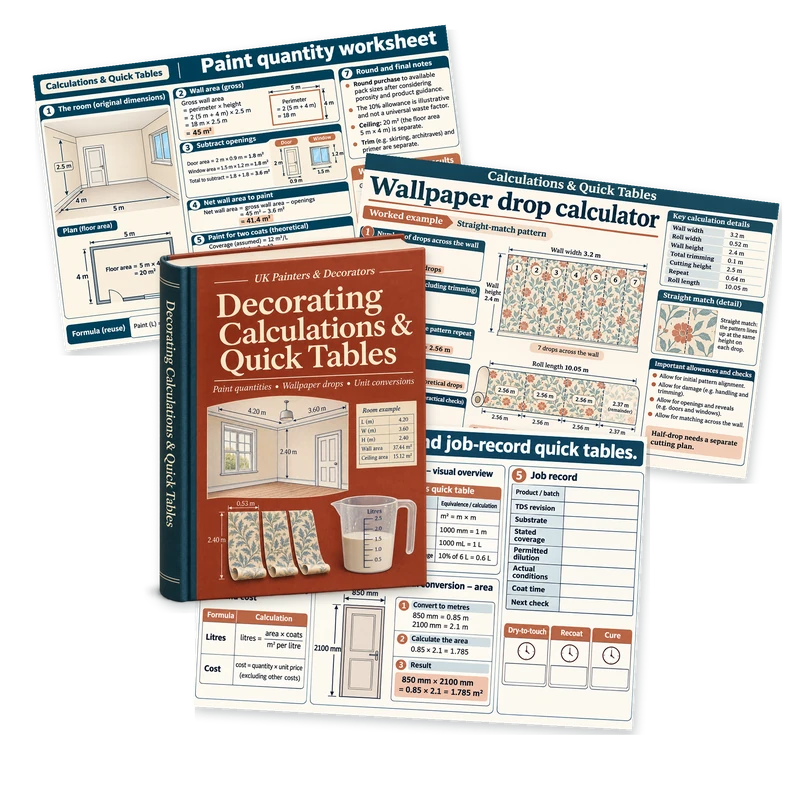
Follow the dimensions, assumptions and units from the first measurement to the result.
Compare materials and symptoms, then identify what needs checking before choosing a method.
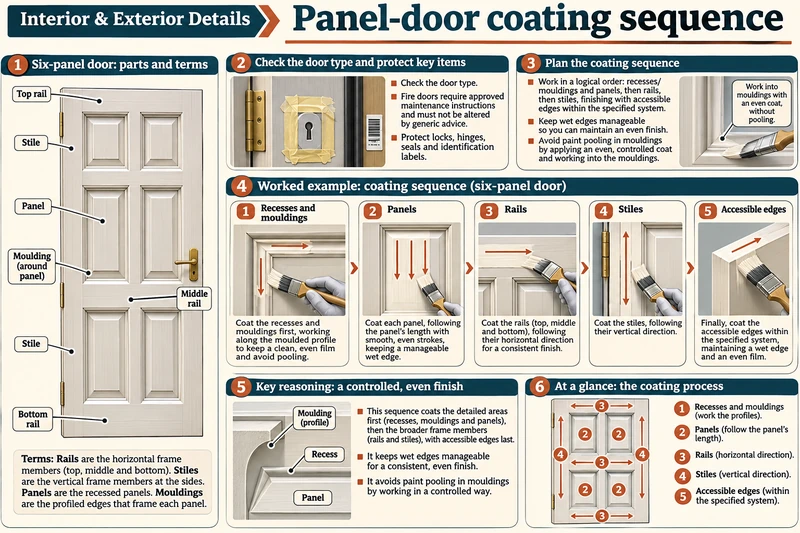
Use sequences and explained examples to connect each step with its purpose.
Choose a topic. See the detail. Follow the reasoning.
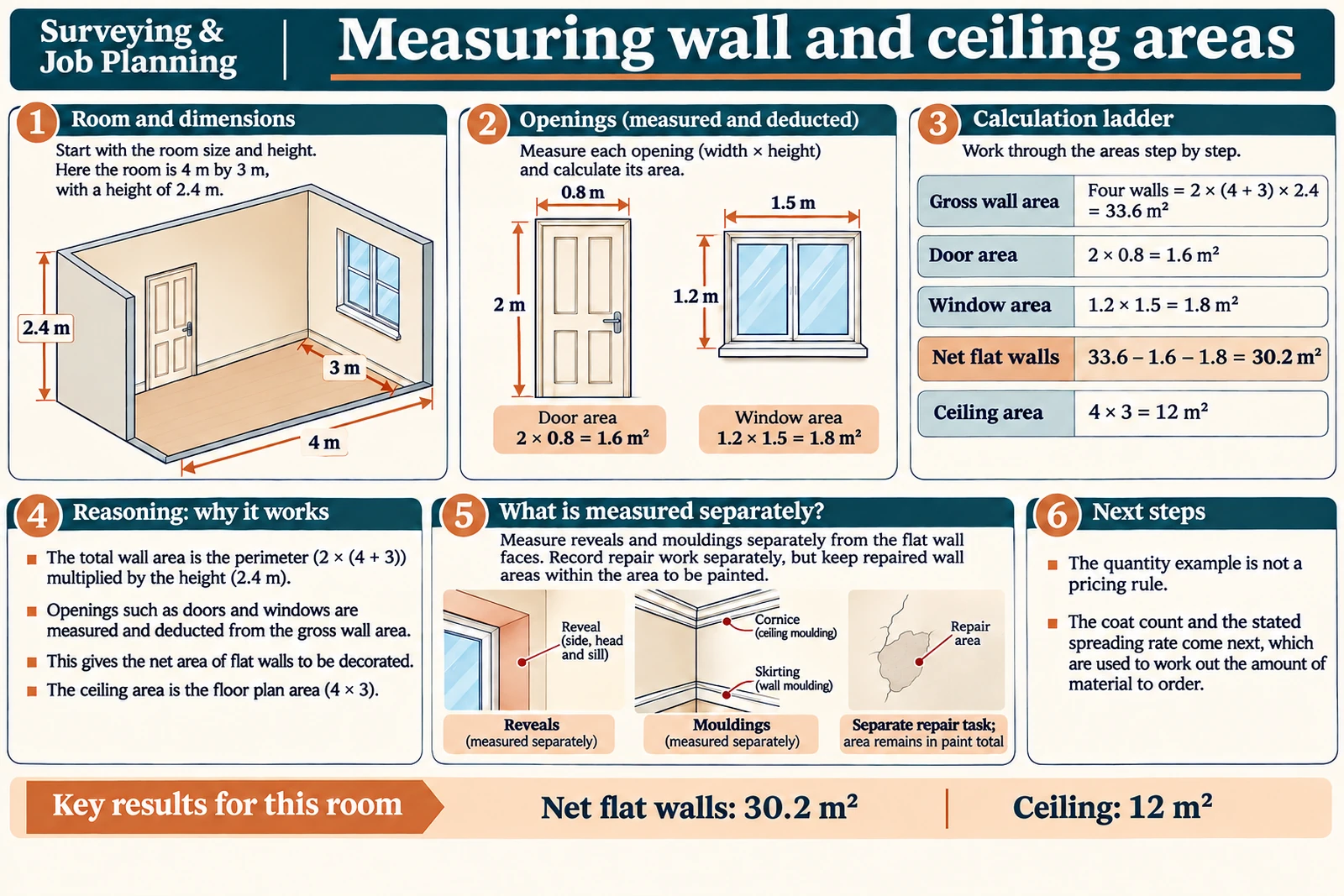
EXPLORE THE COLLECTIONRoom dimensions, openings and surface areas — written out on the left, drawn step by step on the right.
Consider a room 4 m long and 3 m wide, with a height of 2.4 m. The total wall area is the perimeter multiplied by the height: 2 × (4 + 3) × 2.4 = 33.6 m².
The door is 2 m × 0.8 m, giving an opening of 1.6 m². The window is 1.2 m × 1.5 m, giving an opening of 1.8 m². Deduct these measured openings from the gross wall area: 33.6 − 1.6 − 1.8 = 30.2 m² of net flat wall area.
The ceiling area is the floor plan area: 4 × 3 = 12 m². Measure reveals and mouldings separately. Record repair work separately, but keep repaired wall areas within the area to be painted.
This quantity example is not a pricing rule. The coat count and stated spreading rate are used next to calculate the material quantity.

Both sides use the same example from this guide: 30.2 m² of net flat walls and a 12 m² ceiling.
From the first room survey to inspection and maintenance. Find the area you want to understand, then open its maps.


Survey rooms, measure surfaces and define the work.
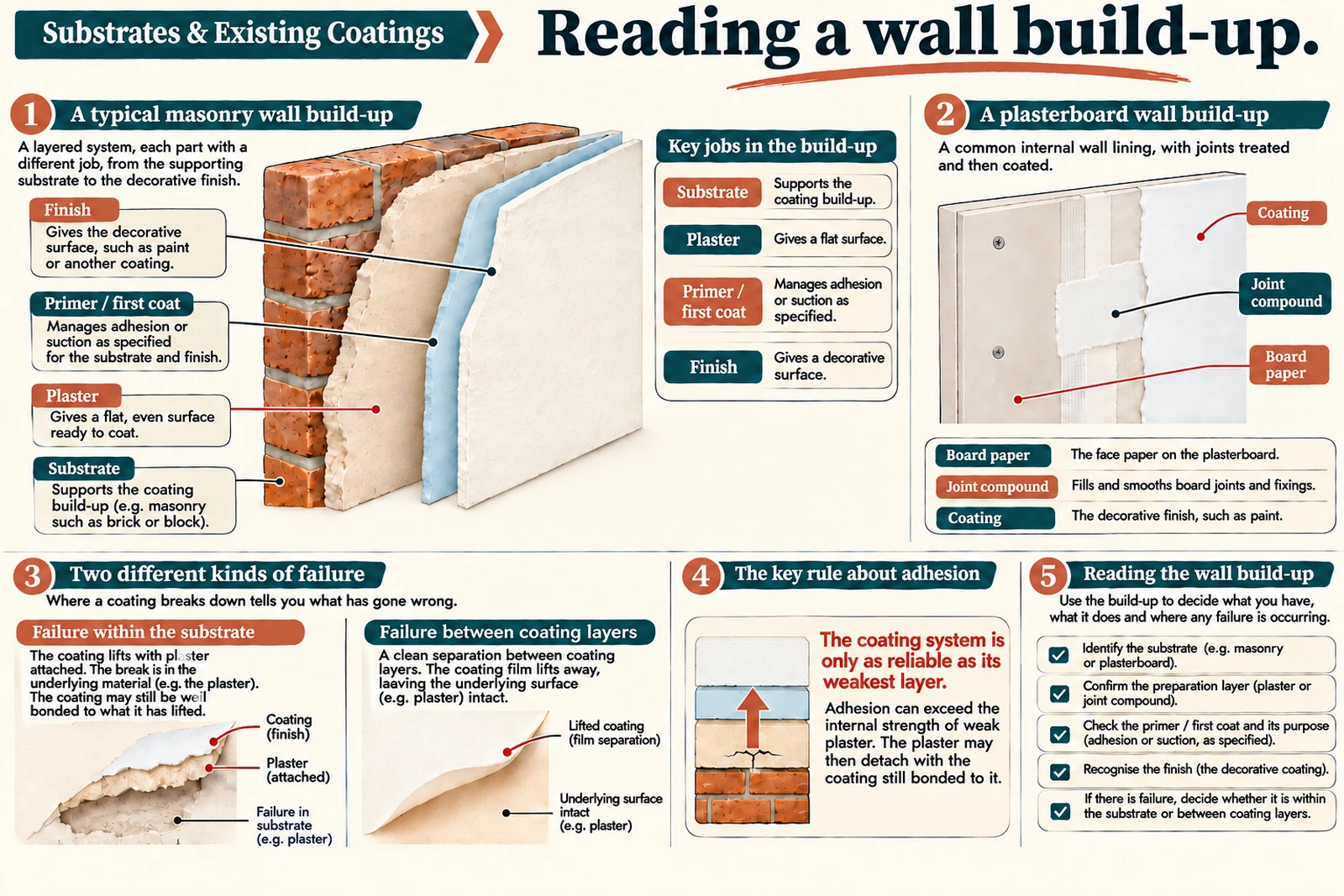
Explore the maps →02Read wall layers, timber, metals and existing finishes.
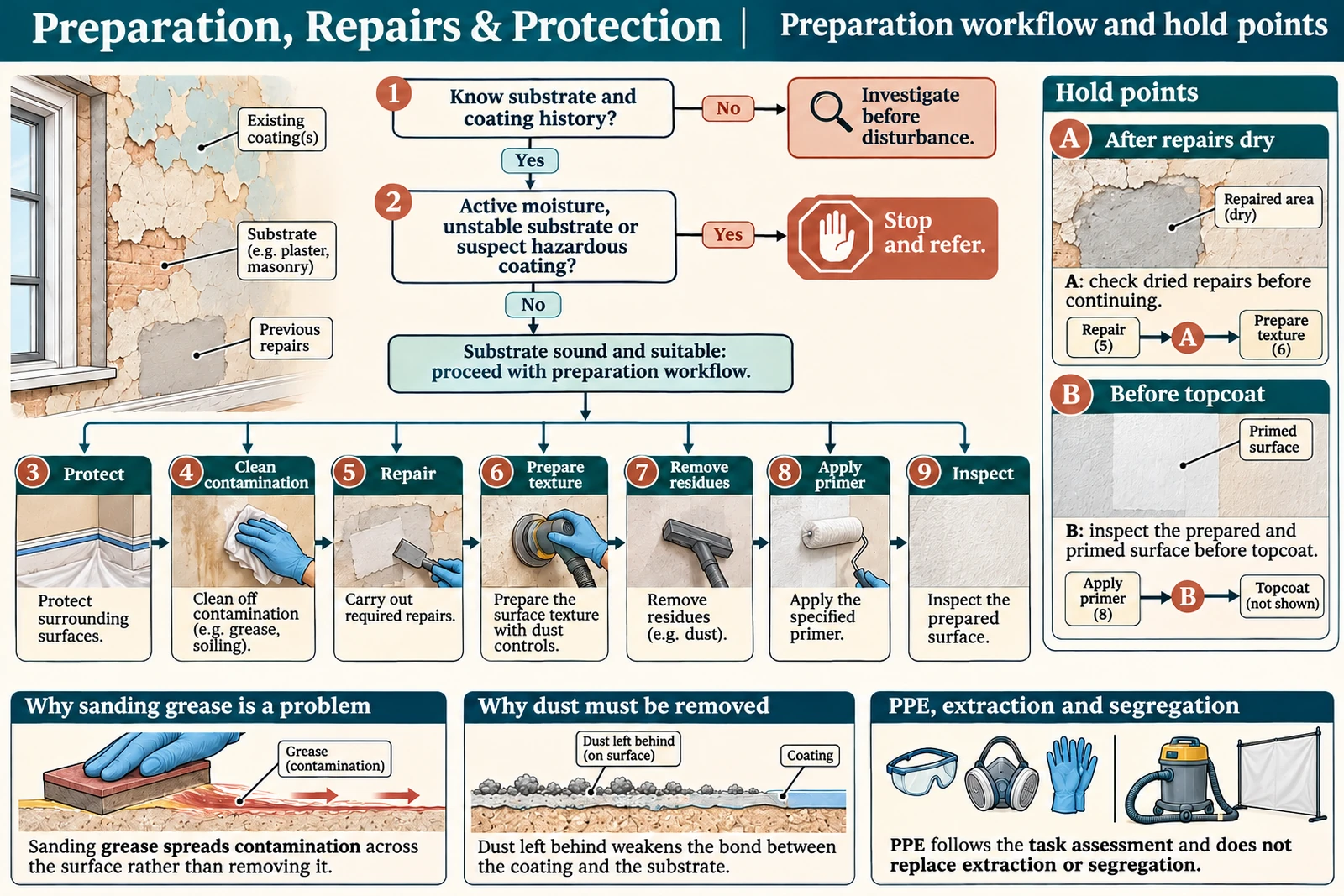
Explore the maps →03Connect cleaning, repairs and protection to sound preparation.
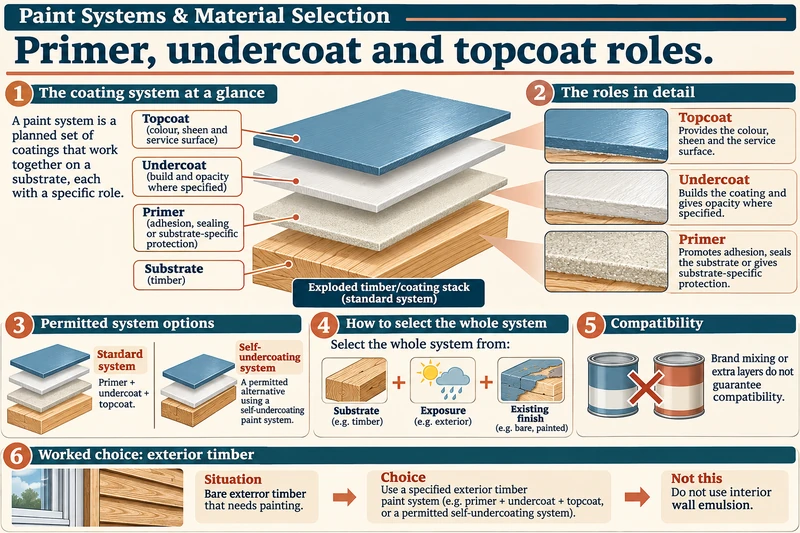
Explore the maps →04Understand primers, undercoats, finishes and drying stages.
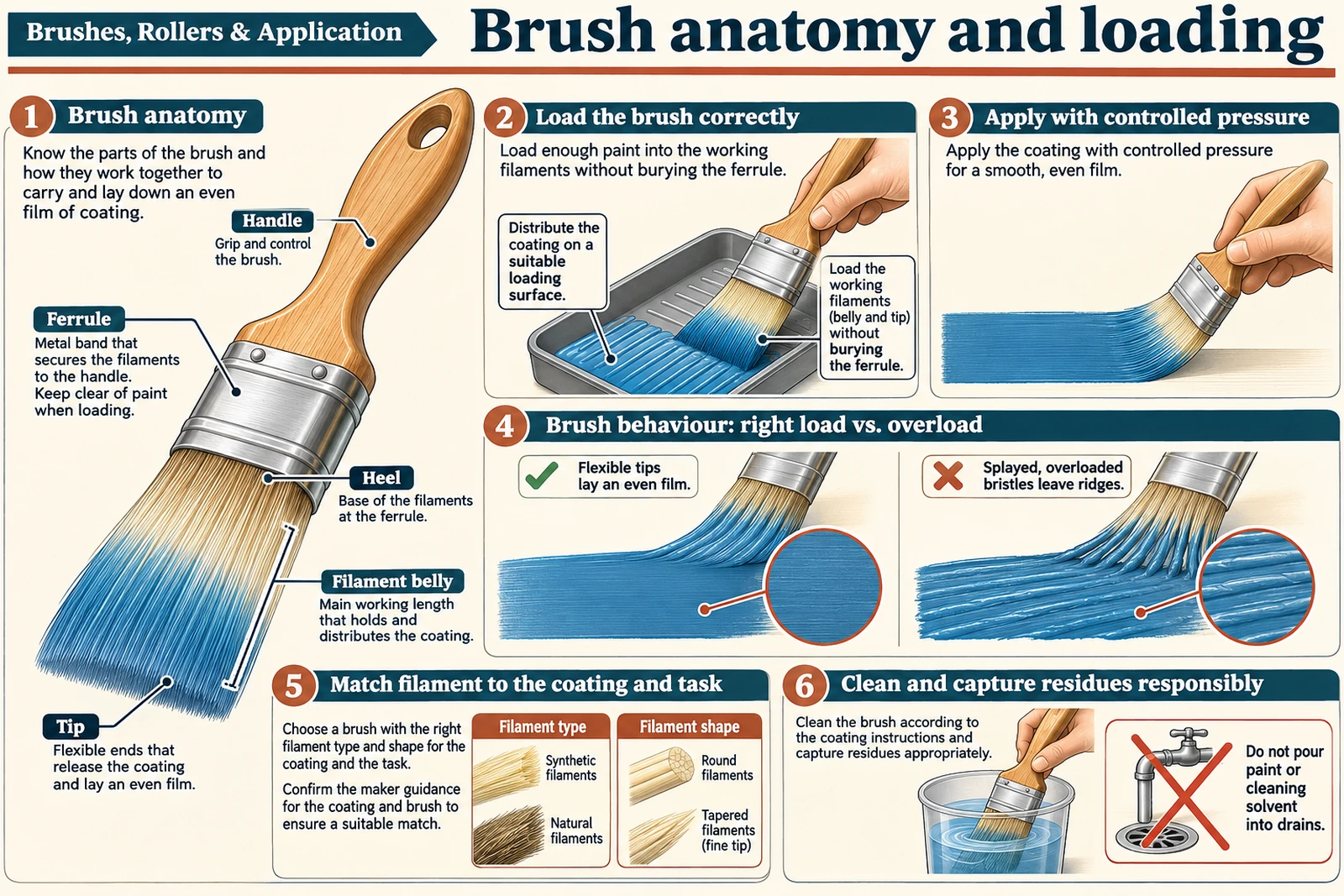
Explore the maps →05Compare tools and follow loading, cutting-in and rolling.
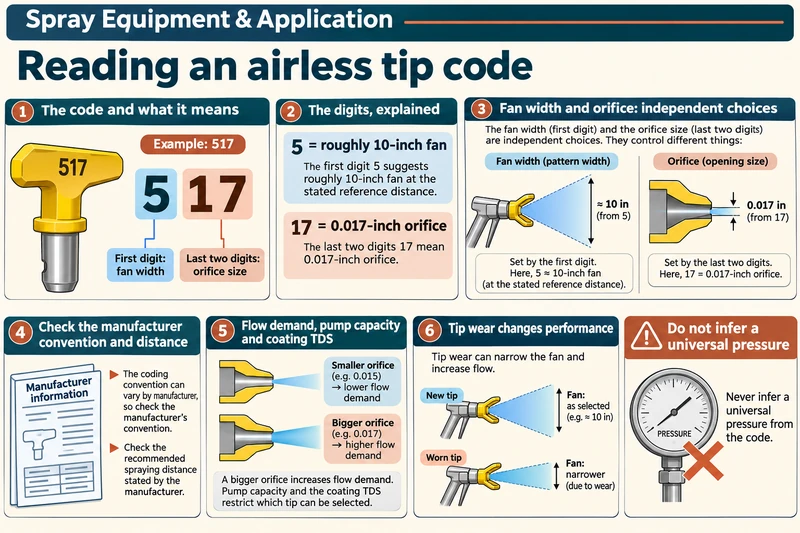
Explore the maps →06Understand equipment, spray patterns and setup checks.
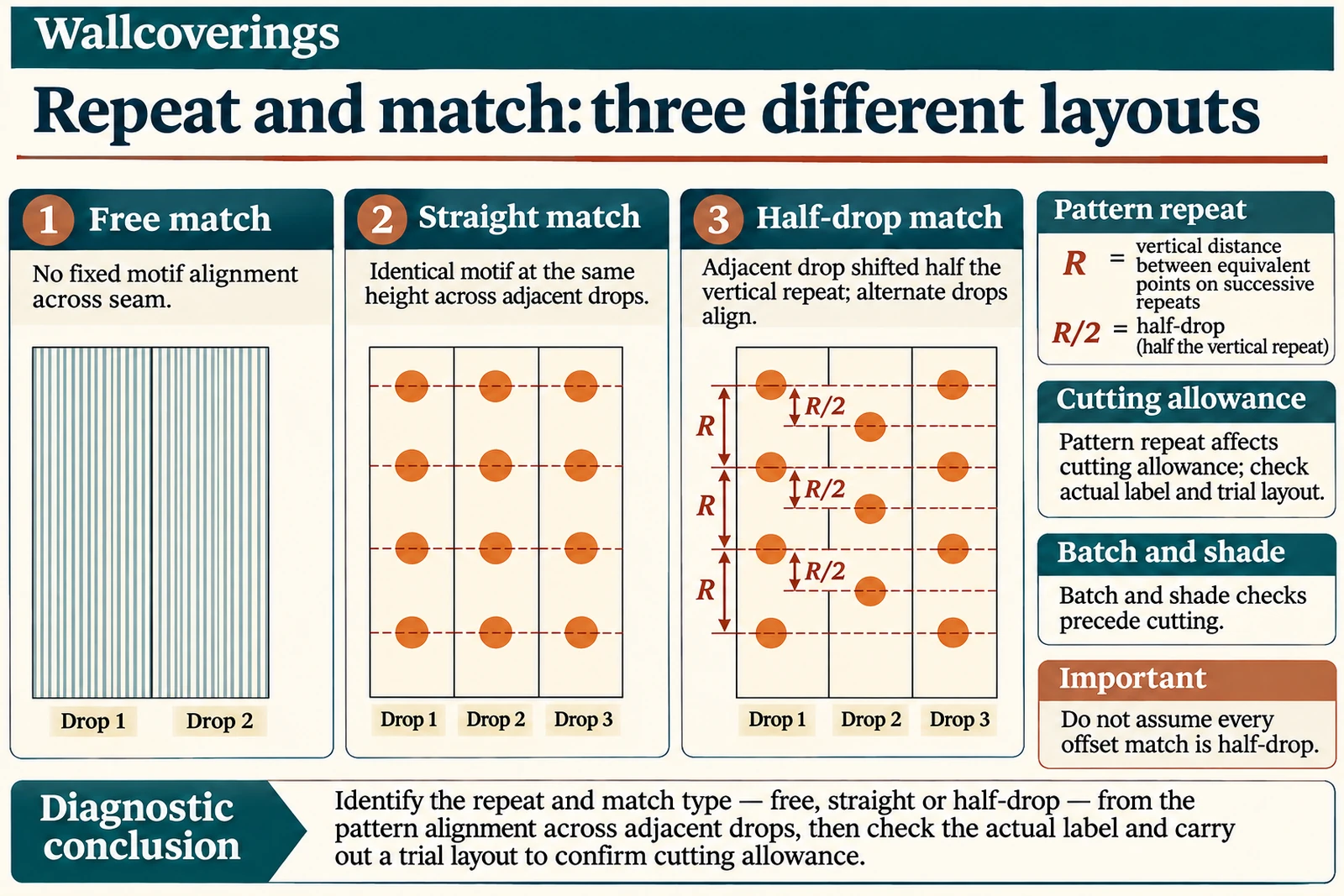
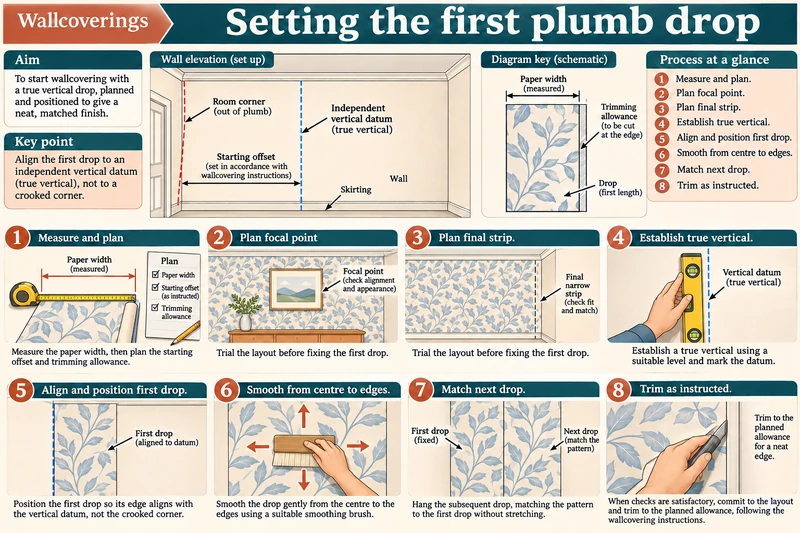
Explore the maps →07Read repeats, plan drops and compare hanging methods.
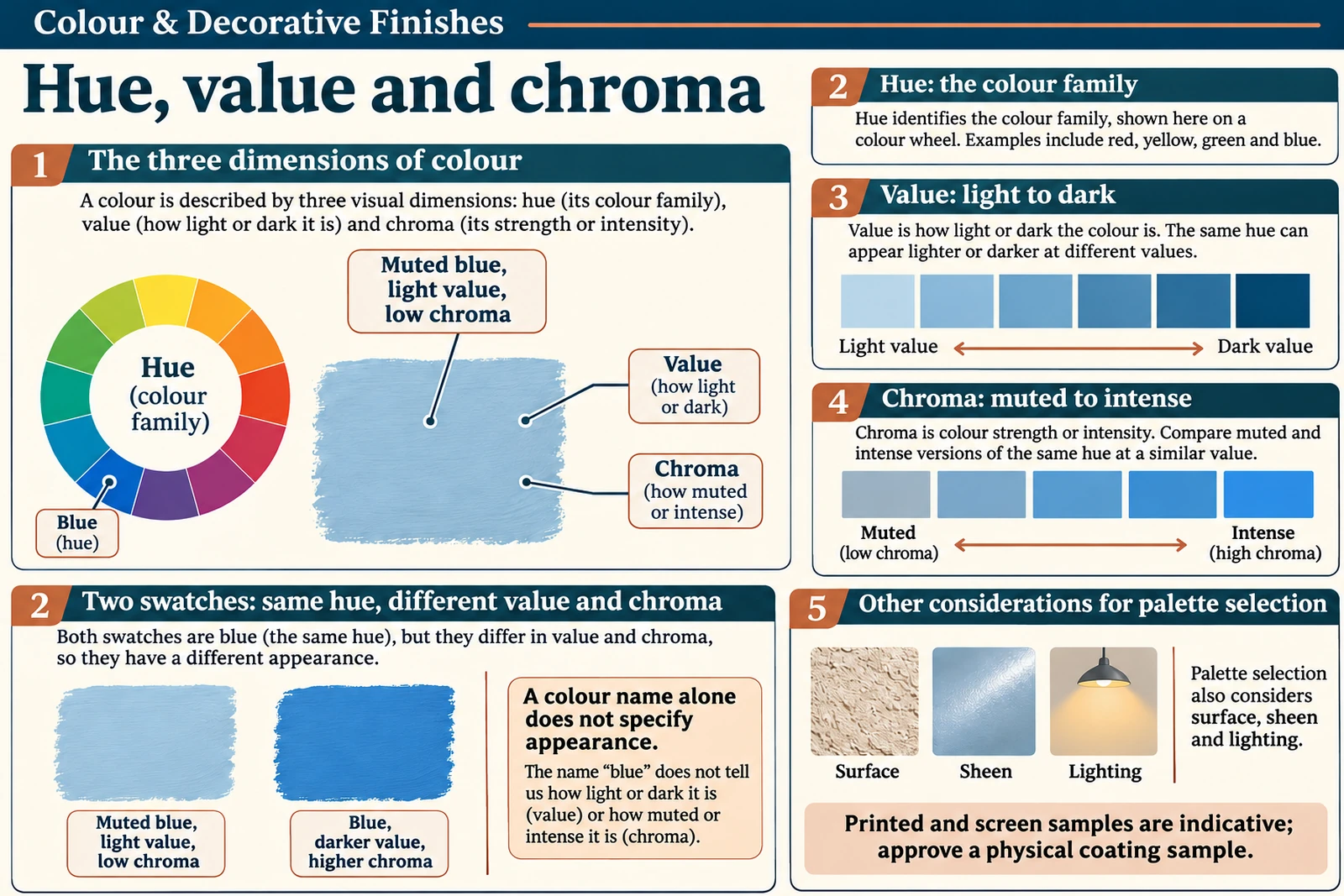
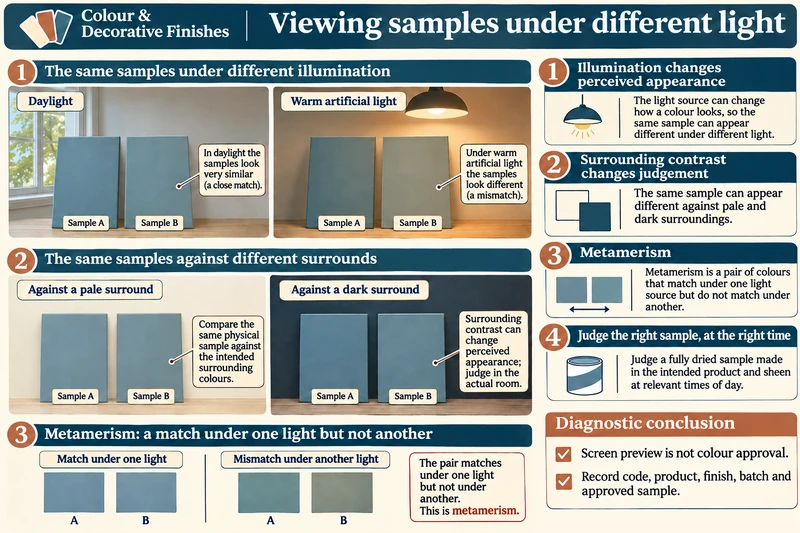
Explore the maps →08Explore colour relationships, lighting and decorative effects.
Explore the maps →09Study junctions, trim and exposed details.
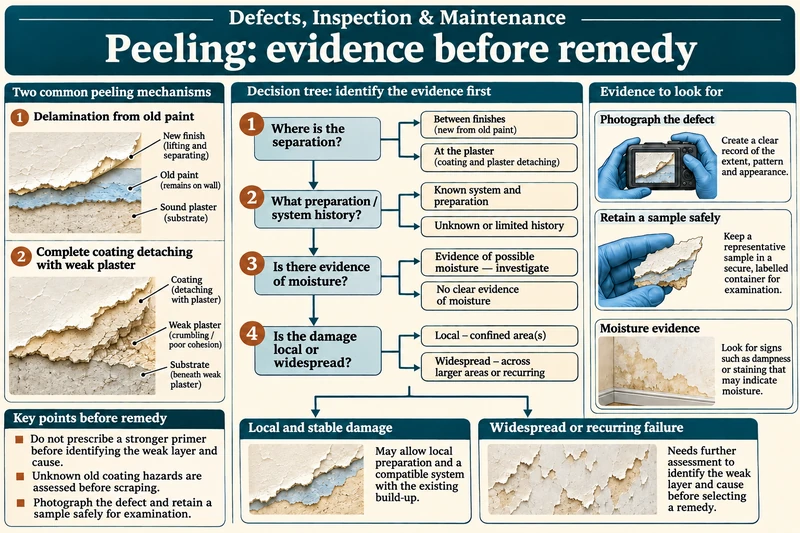
Explore the maps →10Separate symptoms from causes and follow the evidence.
Explore the maps →Build your understanding with annotated maps, calculation sheets and illustrated cases. Use the companion questions to check how the ideas connect.
Connect classroom terms with illustrated surfaces, tools and processes.
Revisit the principles behind the work you see during supervised training.
Find a visual explanation of a topic you want to refresh.
Use labelled diagrams and side-by-side comparisons to follow the explanation.
Trace quantities and units through each calculation, rather than seeing only an answer.
Use the maps alongside your existing learning materials and product instructions.
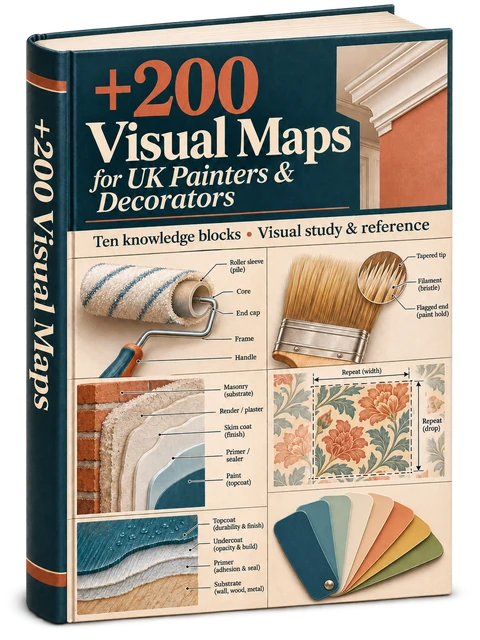
+200 Visual Maps for UK Painters & Decorators
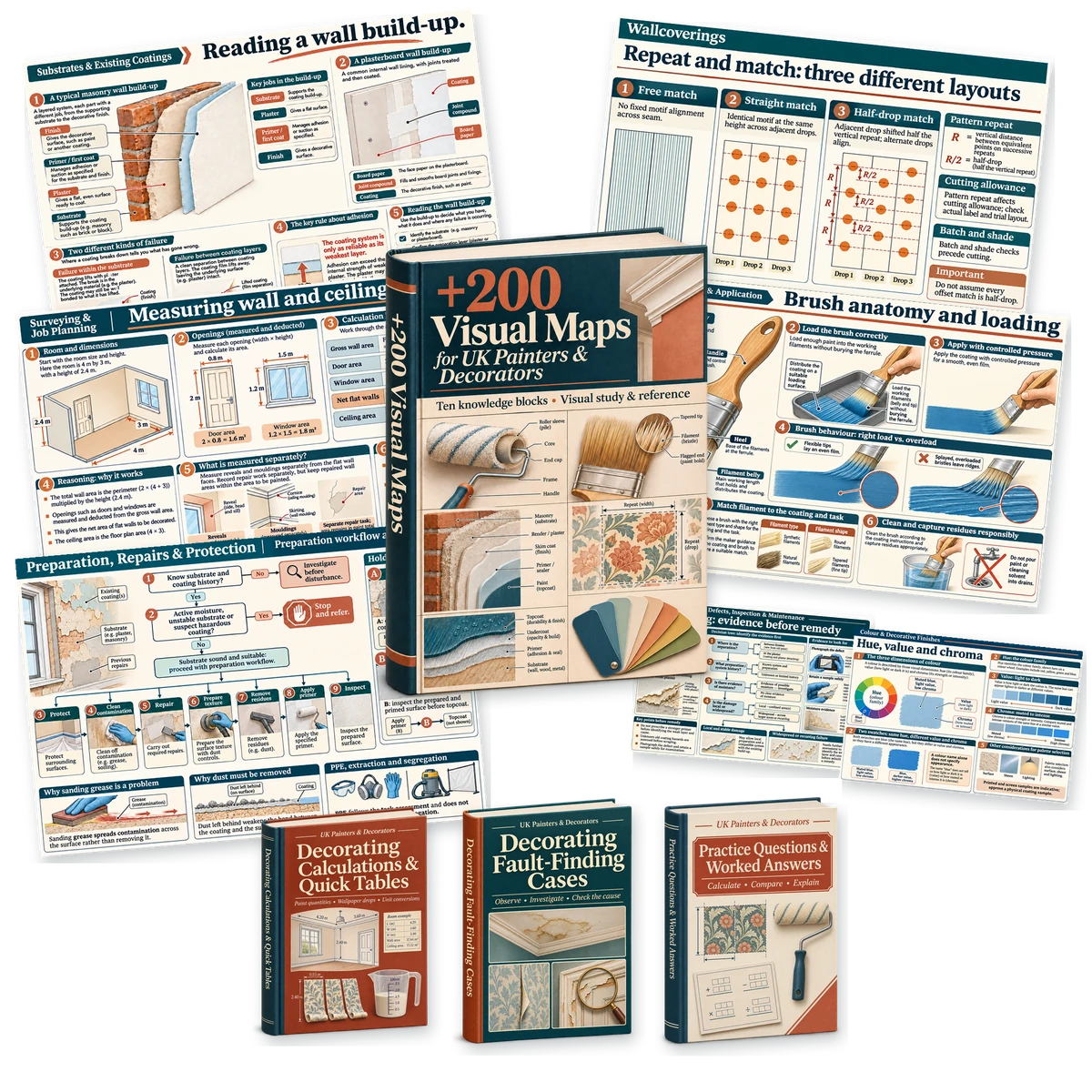
Choose your topic and start with the detail you want to understand.

Three pages covering paint quantities, wallpaper drop calculations and unit conversions.

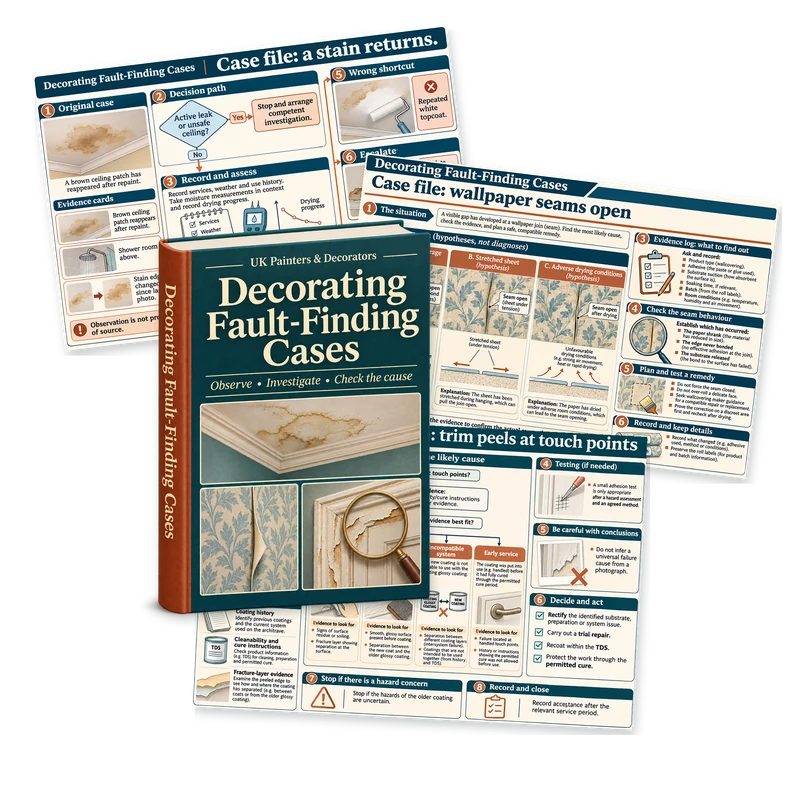
Three illustrated cases: a returning stain, opening wallpaper seams and peeling trim.

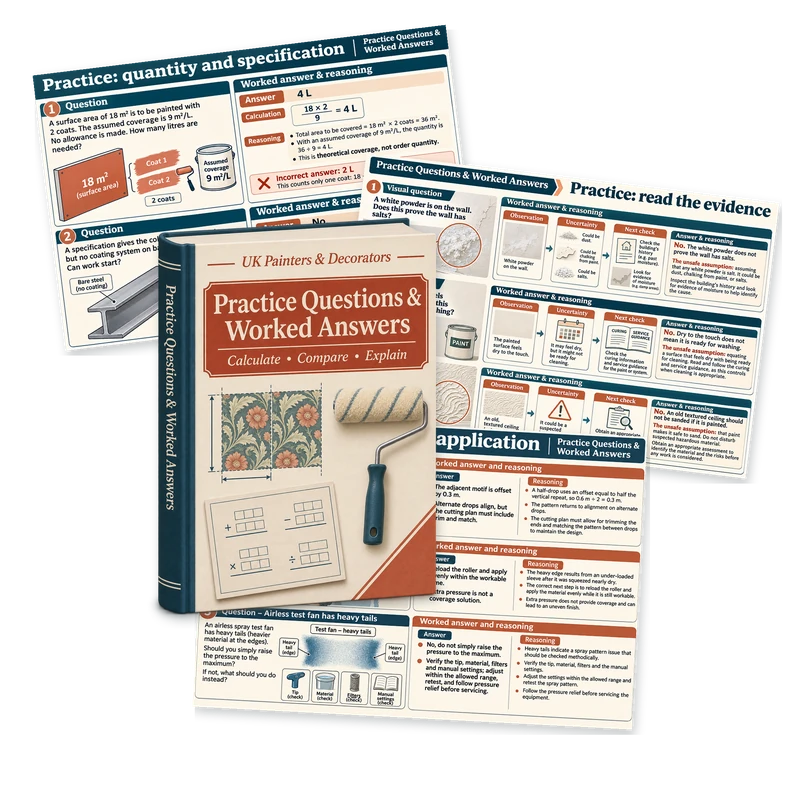
Eight original questions across three pages, each with an explained answer.

£27
Visual maps + all three companion guides.
GET THE COLLECTION →Find your topic. Follow the illustrations. Work through the examples.

Read the drawing and its explanation together, then apply the reasoning to a worked example. Use comparisons and case questions to check what you have understood.
A practical companion for study and trade knowledge.
The materials library links each topic to its listed HSE, manufacturer or technical guidance.
Follow the current product instructions, project specification and appropriate training when applying a concept.
Find the knowledge block and open the relevant map.
Read the labels, comparisons and working in their visual order.
Try the companion questions and revisit any steps that need another look.
A digital study and reference collection covering ten areas of painting and decorating, with three companion guides.
Painting and decorating students, apprentices, beginners and professionals building or refreshing their trade knowledge. Use it alongside training, project information and product documentation.
It spans surveying, substrates, preparation, paint systems, brushes and rollers, spraying, wallcoverings, colour, interior and exterior details, and defects. It is a visual reference, not a professional qualification.
Yes. Topic-based maps and explained practice answers support revision. The material is independent and does not promise coverage of a particular examination.
Yes. The language and examples use British English. Always check the instructions and requirements applying to your project and selected products.
Four PDFs: the main guide contains over 200 visual maps across ten knowledge blocks. Decorating Calculations & Quick Tables has three pages of calculations and tables; Decorating Fault-Finding Cases has three illustrated case pages; Practice Questions & Worked Answers has three pages with eight explained questions.
Yes. Open the PDFs on a phone, tablet or computer and zoom into the diagrams. A larger screen makes dense illustrations easier to study.
The pages are suitable for personal study and reference printing. No physical books are supplied.
The maps explain concepts visually. Training and supervised experience help you apply them appropriately. They do not replace competence, project specifications or product instructions.
No. Calculations identify their assumptions, and illustrated processes explain principles. Use the current technical data sheet and safety information for the actual product and task.
Ten knowledge blocks · Three companion guides · Digital PDFs